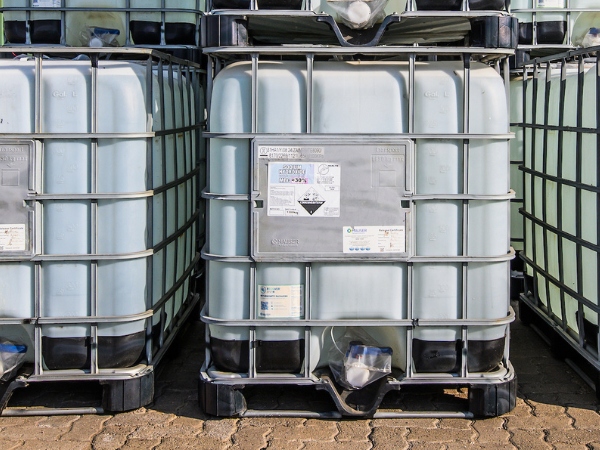
Sodium Hypochlorite, Chloride of Lime, Calcium Hypochlorite (HTH), Lead Nitrate, Copper Sulphate, Sulphuric Acid, Nitric Acid, Sodium Nitrate, Sodium Metabisulphite (SMBS), Sulphamic Acid, Silica, Anhydrous Borax, Barium Chloride

Various chemicals available: Sodium Hypochlorite, Chloride of Lime, Calcium Hypochlorite (HTH), Lead Nitrate, Copper Sulphate, Sulphuric Acid, Nitric Acid, Sodium Nitrate, Sodium Metabisulphite (SMBS), Sulphamic Acid, Silica, Anhydrous Borax, Barium Chloride
Sodium Hypochlorite: A strong oxidizing agent performs as a disinfectant for large scale water treatment processes. Can also be used to disinfect domestic potable water tanks.
Chloride of Lime: Is a strong oxidizing agent and can be used to neutralise hazardous chemicals. Also used as a disinfectant for drinking water, pool water and wastewater.
Calcium Hypochlorite (HTH): Used as a disinfectant, Odor remover and purifier in water and wastewater treatment plants. Lastly, it can kill off Algae formation in pools.
Lead Nitrate: In mining it increases the dissolution speed during cyanidation, preventing the mineral passivation.
Copper Sulphate: Used as an electrolyte in copper refining and as an activator in the concentration by froth flotation of lead, zinc, cobalt and gold ores.
Sulphuric Acid: In metal mining, sulphuric acid is used to leach copper oxide minerals.
Nitric Acid: Nitric Acid is used as is in the digestion of wirewool where silver is NOT to be recovered together with gold since it dissolves most metals but gold. It is a colourless highly corrosive mineral acid. Older samples however acquire a yellow cast due to decomposition into oxides of nitrogen.
Sodium Nitrate: Used industrially as an oxidising agent, with applications in glass manufacturing, metal treatment, thermal energy storage/heat-transfer systems, and chemical processing.
Sodium Metabisulphite (SMBS): Used as a reducing and dechlorinating agent in mineral processing, water and wastewater treatment, and chemical processing.
Sulphamic Acid: Used as an acid cleaning and descaling agent for removing limescale, mineral deposits, rust and process deposits from industrial equipment, piping, boilers and heat exchangers.
The chlorine-based chemicals should be stored in cool and less humid, well ventilated, dry environment to avoid release of chlorine gas and therefore, the decrease in strength. They have similar functions but are interchanged depending on the nature of the water to be treated (e.g. raw water, potable water, wastewater etc).